AMD Ryzen 7 9800X3D on the MSI MAG B850 Tomahawk Max WiFi
On the MSI MAG B850 Tomahawk Max WiFi, the AMD Ryzen 7 9800X3D runs at 11 % of the board's 1260 W sustained power capacity, which puts the VRM at an estimated 45 °C and leaves clocks untouched.
By Farrukh Sufyan Sarwar · Published 19 September 2026 · Last verified 20 September 2026 · Model v1.0 · Build 2026-09-20
- Estimated VRM temperature
- 45 °C
- 38 °C case air plus 7 °C of rise
- Stress ratio
- 0.11
- 140 W of 1260 W capacity
- Capacity score
- 93/100
- 100 minus the stress ratio times 60
- Expected clock loss
- 0 %
- Sustained all-core clocks, not gaming frame rate
- Board capacity
- 1260 W
- 14 × 80 A, doubled
- Processor draw
- 140 W
- 162 W at peak boost
What happens when you build this
This pairing is not close to any limit. 140 W against 1260 W of capacity leaves the MSI MAG B850 Tomahawk Max WiFi running its stages at 11 % load, and our model puts the VRM at 45 °C in a closed case. Nothing about the AMD Ryzen 7 9800X3D pushes this board into the region where clocks start dropping.
The MSI MAG B850 Tomahawk Max WiFi carries 14 Vcore power stages rated 80 A each, driven in doubled pairs, which costs a little transient response, with large finned blocks with real thermal mass. That works out to about 1260 W of sustained core power once the design and the cooling are accounted for, which is the number the AMD Ryzen 7 9800X3D's 140 W is measured against.
Buy it on the rest of the specification rather than on power delivery, because at 11 % of capacity the VRM has stopped being the interesting variable. Count the M.2 slots you need, check the rear ports against what you actually plug in, and let the MSI MAG B850 Tomahawk Max WiFi's 14 stages get on with it.
The measurement
The gauge shows the estimated VRM temperature under a sustained all-core load, with a thinner copper needle for the brief peak the processor reaches at full boost. The schematic beside it shows the same thing as current per power stage.
Estimated VRM temperature
AMD Ryzen 7 9800X3D on MSI MAG B850 Tomahawk Max WiFi: estimated 45 °C sustained, 46 °C at peak boost. Risk band: NONE.
- Sustained
- Sustained 45 °C
- Peak boost
- Peak boost 46 °C
Power delivery
Where the PCIe lanes go
The MSI MAG B850 Tomahawk Max WiFi keeps its 3 M.2 slots clear of the graphics lanes, so the primary slot stays at x16 whatever you install. That is one fewer configuration trap than boards that route a second M.2 slot from the processor.
The MSI MAG B850 Tomahawk Max WiFi takes DDR5, which the AMD Ryzen 7 9800X3D supports, and validates memory up to DDR5-8400. Firmware is not an issue: the MSI MAG B850 Tomahawk Max WiFi ships with a BIOS that already knows Zen 5 V-Cache.
Boards that run the AMD Ryzen 7 9800X3D without throttling
Each of these keeps the processor under a third of the board's sustained power capacity, and each has a listing we can verify.
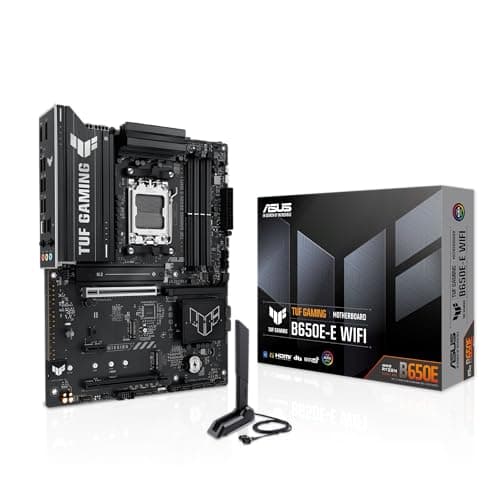 BudgetB650EASUS
ASUS TUF Gaming B650E-E WiFi
The cheapest board here that still leaves the AMD Ryzen 7 9800X3D real headroom.
Capacity used22 % · 52 °CAMD Ryzen 7 9800X3D draws 140 W of 648 W
- Socket
- AM5
- Vcore
- 8 × 80 A
- Memory
- DDR5
$145.99
as of 20 September 2026
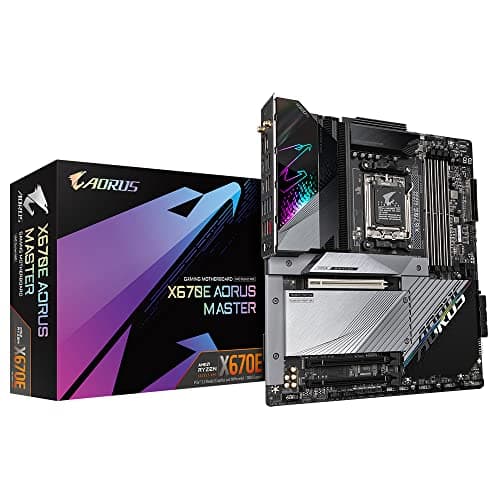 EnthusiastX670EGigabyte
Gigabyte X670E Aorus Master
The most headroom of any board in the database for the AMD Ryzen 7 9800X3D.
Capacity used7 % · 43 °CAMD Ryzen 7 9800X3D draws 140 W of 1890 W
- Socket
- AM5
- Vcore
- 16 × 105 A
- Memory
- DDR5
$499
as of 20 September 2026
The MSI MAG B850 Tomahawk Max WiFi
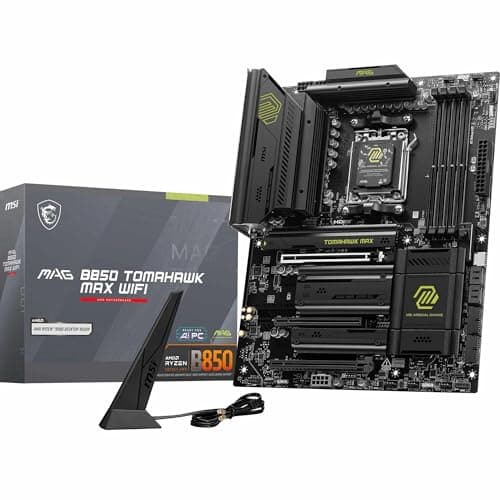
- Socket
- AM5
- Vcore
- 14 × 80 A
- Memory
- DDR5
$169.99
as of 20 September 2026
- Chipset
- B850
- Form factor
- ATX
- Vcore stages
- 14 × 80 A
- Phase design
- Doubled phases
- VRM cooling
- Heavy heatsink
- VRM tier
- Tier A
- Memory
- DDR5-8400
- BIOS Flashback
- Yes
Questions people ask about this pairing
- Will the AMD Ryzen 7 9800X3D throttle on the MSI MAG B850 Tomahawk Max WiFi?
No. The AMD Ryzen 7 9800X3D draws 140 W in a sustained all-core load and the MSI MAG B850 Tomahawk Max WiFi holds about 1260 W, so the VRM sits at an estimated 45 °C and clocks hold.
- How many power phases does the MSI MAG B850 Tomahawk Max WiFi have?
14 Vcore power stages rated 80 A each, in a doubled design. Counting only the core rail matters here — vendor marketing often adds the SoC and auxiliary phases to reach a bigger number, and those carry none of the CPU's core load.
- Does the MSI MAG B850 Tomahawk Max WiFi need a BIOS update for the AMD Ryzen 7 9800X3D?
No. The MSI MAG B850 Tomahawk Max WiFi ships with a BIOS that already supports Zen 5 V-Cache, so the AMD Ryzen 7 9800X3D posts out of the box.
- What memory does the AMD Ryzen 7 9800X3D take on the MSI MAG B850 Tomahawk Max WiFi?
DDR5, in up to 4 slots, validated to DDR5-8400 on this board.
- What VRM temperature should I expect with the AMD Ryzen 7 9800X3D on this board?
Our model estimates 45 °C, from 38 °C of interior case air plus the stress ratio of 0.11 scaled by 65 °C. Measured numbers move with case airflow and ambient temperature, so treat this as a band rather than a reading.